
Category: Tutorial
-
The Secrets of Colour Interpolation
This post discusses about the tricky problem of colour interpolation, and explores possible solutions. Many software and engines offer read-to-use functions to interpolate colours. In Unity, for instance, Color.Lerp is available and does its job pretty nicely. Use the interactive swatch below to see how Color.Lerp works. There’s nothing wrong in using these functions, as long as you know…
-
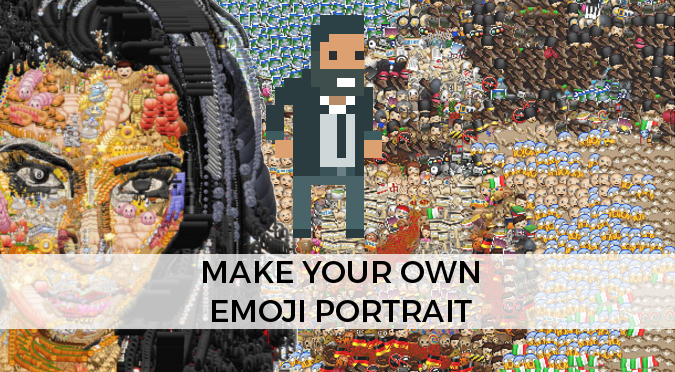
Make Your Own Emoji Portrait
—
Emoji Portraits This form allows to create your very own emoji portrait from any picture. Use the sliders to customise the size and angle of the emojis. When you’re happy, right click on the image to save it. The rest of this article explains how to replicate this effect using JavaScript. How it’s done… The inspiration from this…
-

How to build a distance sensor with Arduino
You can safely say that when it comes to electronics, there are countless ways to measure distances. This tutorial will explain how to build an inexpensive IR distance sensor under $8, perfect for close measurements and motion detectors. You will need: You can download the final Arduino code here. This post is part of a longer series of tutorial about…
-

Accessibility Design: Color Blindness
The filter This tutorial will teach you how to create and use post-processing effects which simulate how colour blind players might experience your Unity game. One of my most anticipated games is The Witness; since it uses so many vibrant colours, it will be used as an example in this tutorial. This is how a player affected by red-green colour blindness (protanopia) might see…
-
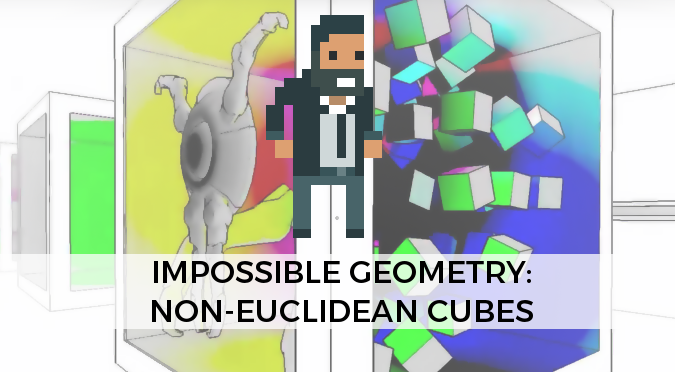
Impossible Geometry: Non-Euclidean Cubes
This tutorial will teach you how to create non euclidean cubes in Unity, giving the illusion that each face is a door onto another dimension. This post is part of a series of tutorials on impossible geometries. This effect can be seen in many game, most notoriously Antichamber which uses it extensively. You can download the Unity package here.
-
How to Write Native Plugins for Unity
Unity has the ability to import pieces of code written (and compiled) in other languages; they are called Native Plugins, and this tutorial will teach you how to build them. Source codes:
-
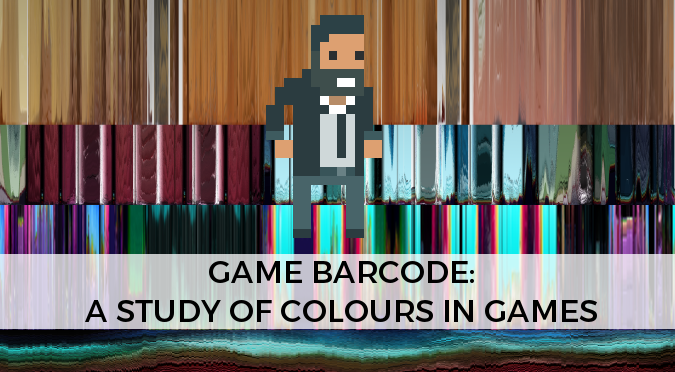
Game Barcode: A Study of Colours in Games
—
This tutorial shows how to download videos from YouTube and to process their frames with Python; I have used this technique to create game barcode, an image created by sorting the colours in each frame of a particular video. You can see some of most intriguing here: This tutorial is divided in four parts:
-

Interactive Graphs in the Browser
—
Having worked both as a teacher and an artist, I know how important data visualisation is. This tutorial will teach you to create interactive network graphs with Python and JavaScript. You can have a go by dragging the nodes of the graph below… You can find a high resolution version of the melancoil tree (2000x2000px, first 1000 numbers)…
-

Recreational Maths in Python
This post is for all the developers and mathematicians out there that are curious to explore and visualize the bizarre properties of numbers. Although Maths plays an important role in today’s technology, many people likes to abuse it for recreational purposes. Part of the appeal of Recreational Maths lies in the challenge to discover something new. Despite what many believe, finding mathematical patterns is very easy; it’s…
-
A Bestiary of Alternative Game Controllers
—
Many game developers are suspicious about alternative controllers, believing that since they can’t be easily mass produced, they are useless. Well, this is the story of how an Arduino got me to San Francisco for free. Twice.